Roof Systems · November 24, 2026 · 5 min read
Roof Decking: The Layer Under Your Shingles
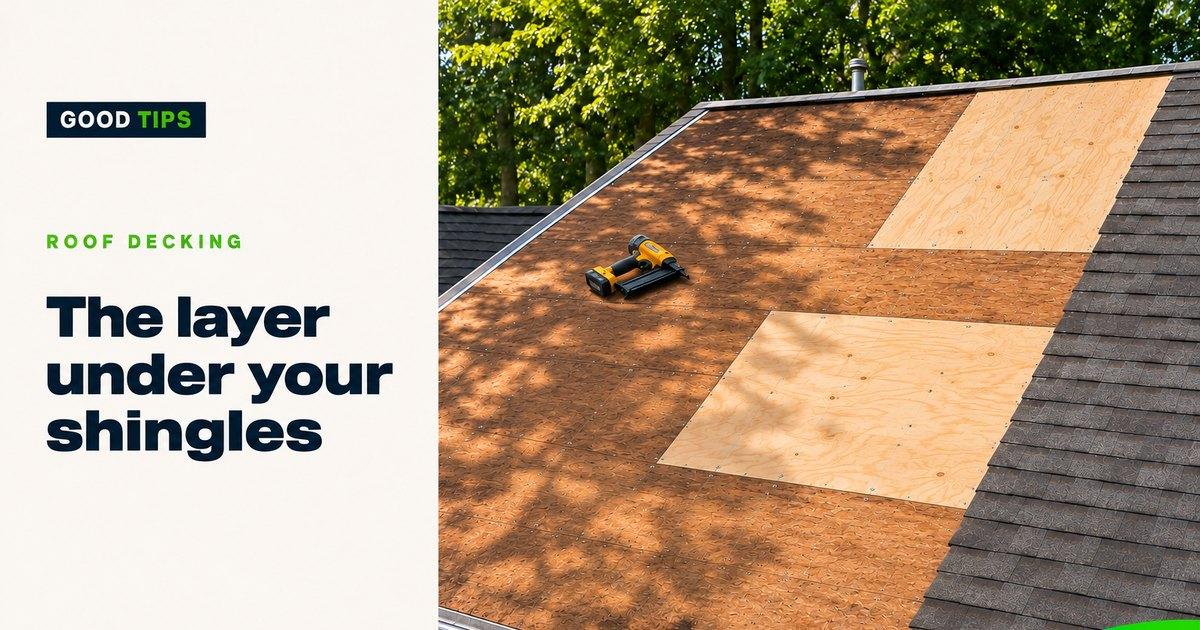
Roof decking is the wood under your shingles that everything is nailed to. When it stays wet, it rots — and a roof that looks fine from the street can be soft underneath.
The quick version
- Roof decking is the wood layer everything on your roof is fastened to.
- It's built to stay dry. Repeated leaks or attic condensation are what rot it.
- Any leak, soft spot, or sag is worth an inspection — the damage under the shingles is often bigger than it looks.
- Bad decking gets replaced before a new roof goes on, and the cause of the water gets fixed too.
What roof decking actually is
Roof decking — also called roof sheathing — is the layer of wood panels fastened across your rafters. It has three jobs:
- A nailing base. Every shingle nail has to bite into something. A shingle's wind resistance depends on that grip.
- A load spreader. Decking carries the weight of the roofing, a crew walking on it, and wind pressure, and passes it to the framing.
- Structural bracing. Nailed properly, the deck stiffens the whole roof frame against wind.
Plywood or OSB?
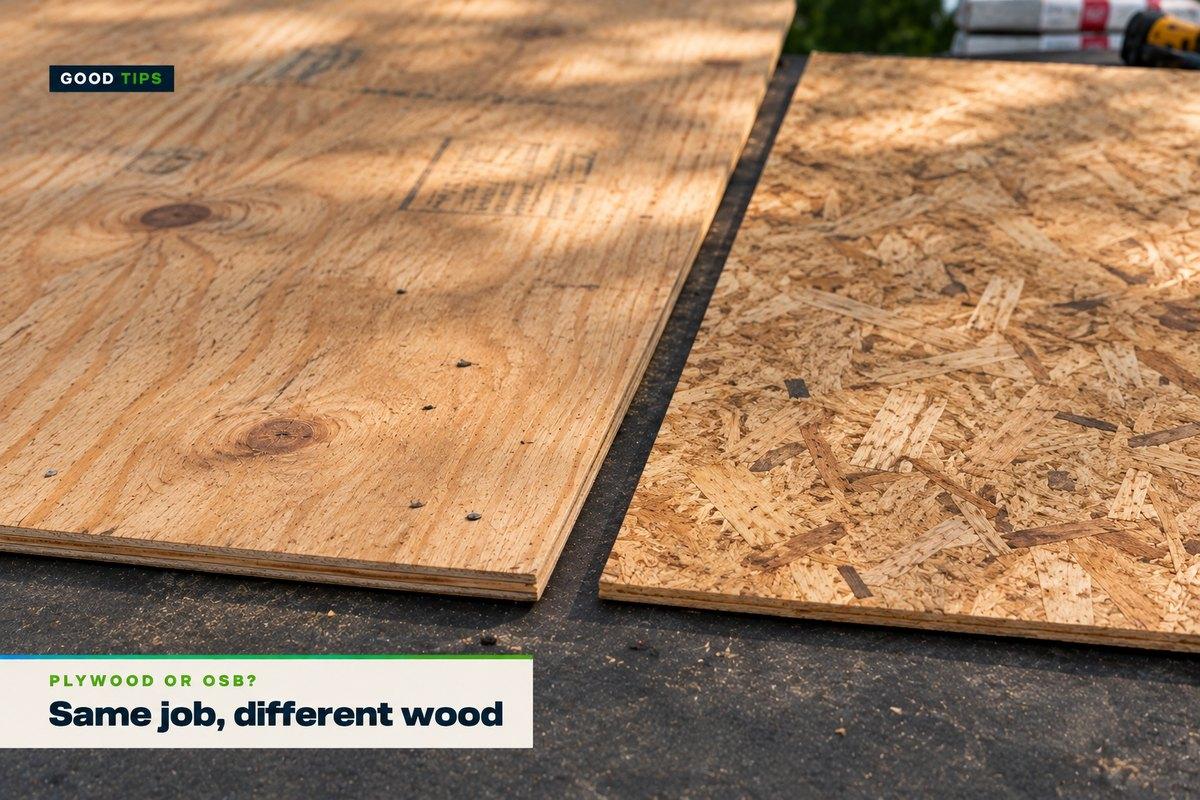
Most roofs built in the last few decades are sheathed with 4×8 panels of plywood or OSB. Both meet building code when they're rated for roofs and installed correctly.
OSB (oriented strand board) is the most common in new homes. Its weak spot is the edges: once they get wet, they swell and stay swollen, and that can show through the shingles as straight raised lines.
| Plywood | OSB | |
|---|---|---|
| Getting wet | Absorbs water faster | Absorbs water slower |
| Drying out | Dries faster, recovers shape | Dries slower; swollen edges stay swollen |
| Cost | Usually higher | Usually lower |
| Consistency | Can have knots and voids | Uniform panel to panel |
| Where you'll see it | Older homes, many re-decks | Most new construction |
How decking gets damaged
Decking rots when water keeps reaching it, again and again or for a long time.
From above:
- Missing, cracked, or storm-damaged shingles
- Failed flashing around chimneys, walls, and skylights
- Cracked rubber boots around plumbing vents
- Missing or poorly lapped drip edge, which lets water wick into the deck edge
- Clogged gutters that back water up under the first row of shingles
- An old roof that has simply worn past its lifespan
From below: humid air from the house condenses on the underside of the decking when the attic doesn't vent well. That can rot the wood with no roof leak at all. (More in Your Attic Is Breathing.)
Any leak is worth a call
A ceiling stain only shows you where water came out, not how far it spread.
Water often runs along the decking before it drips through, so the wet area on the roof can be bigger than the spot on your ceiling.
You can't tell how far it went from inside the house. Catching a leak early is what keeps the fix small, so call at the first sign of water and let us check it from the attic and the roof.
Warning signs you can check yourself
From the ground:
- A dip or sag in the roofline, or a wavy look across the shingles
- Straight raised lines in the shingles that follow panel edges
- Shingles that look buckled or uneven in one area
From the attic (with a flashlight, on a dry day and again after rain):
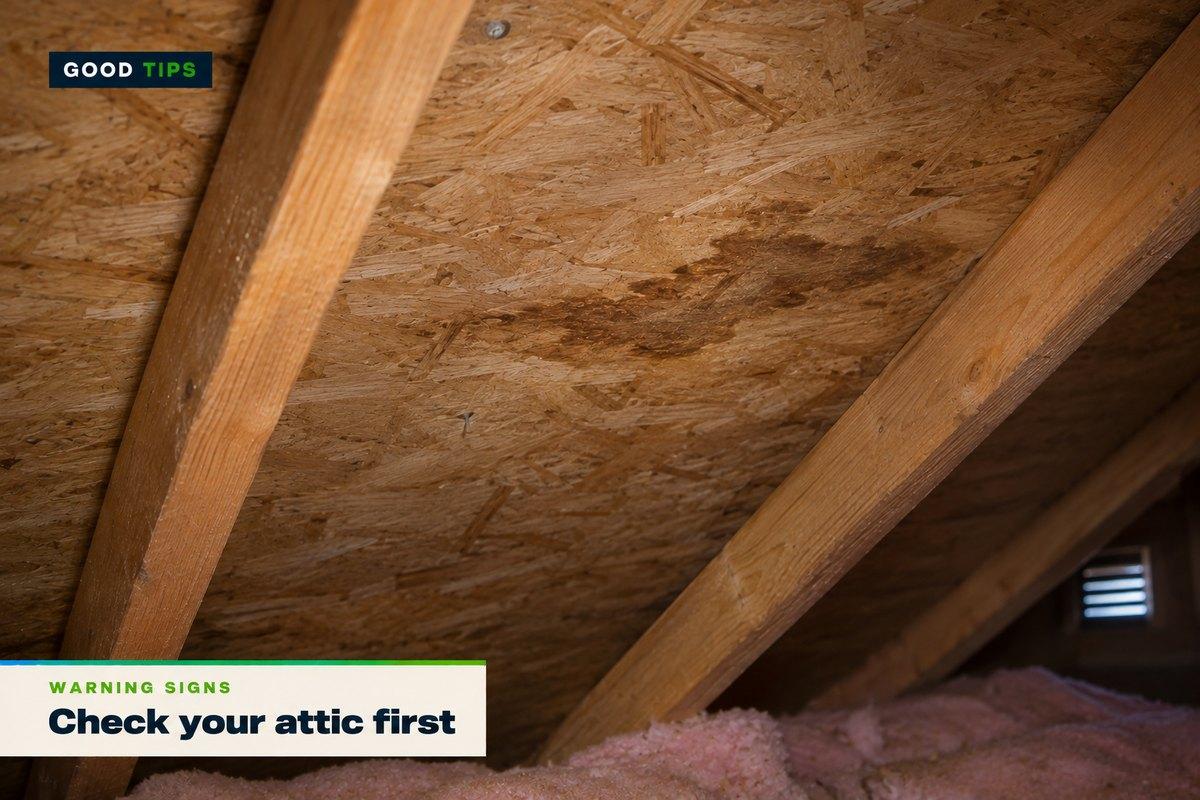
- Dark stains or water marks on the underside of the decking
- Soft, flaking, or crumbling wood
- Black or white growth on the wood
- Rusty nail tips poking through, or frost on them in winter
- Wet or matted insulation
- Daylight showing through anywhere
- A musty smell
From inside the house: ceiling stains or bubbling paint on the top floor.
Please don't walk on the roof to test it — weak decking is exactly where a foot goes through. A sagging section means call soon.
What replacing decking involves
On most homes, damaged decking is found and fixed during a roof replacement. Here's how that works on our jobs:
- Tear-off. The old shingles and underlayment come off, down to the bare deck.
- Inspection. The crew checks the exposed deck board by board. Anything soft, rotten, or delaminated gets marked.
- Cut out and replace. Damaged sections are cut back to the rafters, and new panels go in, gapped and nailed to code.
- Photos. Every replaced sheet is photographed so you can see exactly what was bad and why.
- New roof. Underlayment and shingles go on over a solid deck.
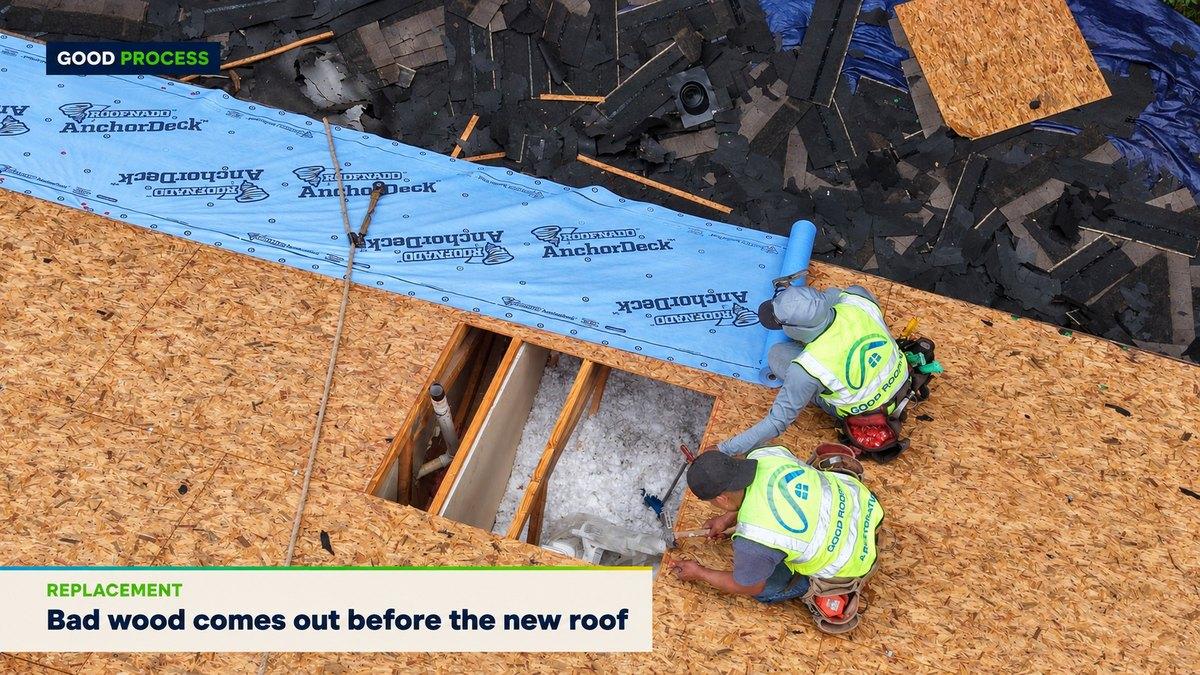
Replacement runs about $100 to $150 per sheet. Nobody can see every board until the shingles are off, so estimates list decking per sheet. (See our Charlotte roof replacement cost guide.)
We don't install a new roof over a bad deck. New shingles can't hold on rotten wood.
Why we recommend a full tear-off over patching one spot: rot doesn't always stay where the leak shows. Decking can already be soft or stained in areas that haven't leaked into the house yet, and nobody can see it until the shingles come off. A full replacement lets the crew check every board, not just the one you know about.
One more step matters: fix the cause. New decking under a leaking chimney flashing or an unvented attic will just rot again.
Commercial buildings: a different kind of deck
Most commercial roofs sit on steel or concrete decks, not plywood. There the risk is rust and soaked insulation hiding above a dry-looking ceiling, so regular inspections and quick leak repairs matter even more. We'll tell you plainly what we find.
Frequently asked questions
Does every new roof need new decking?
No. Many replacements need no new decking or only a few sheets. It depends on how much water the old roof let in and for how long.
My roof sags a little. Is that urgent?
Get it looked at soon. A sag can mean wet, weakened decking, or a framing problem. Either way, it's not something to wait on.
Not sure what's under your shingles?
We'll inspect the roof and attic, take photos, and tell you honestly whether your decking is fine, needs a few sheets, or needs more.
Free inspection. Honest assessment. Financing available.
Schedule a free inspection or call (800) 698-3888.
Questions about your own roof?
Free inspection, honest answer, financing available — schedule here or call (800) 698-3888.